Climate
Under the ice of Lake Merrow, a winter of bubbles
Methane frozen into the lake tells scientists how fast the marsh around it is warming. This year the bubbles came early.
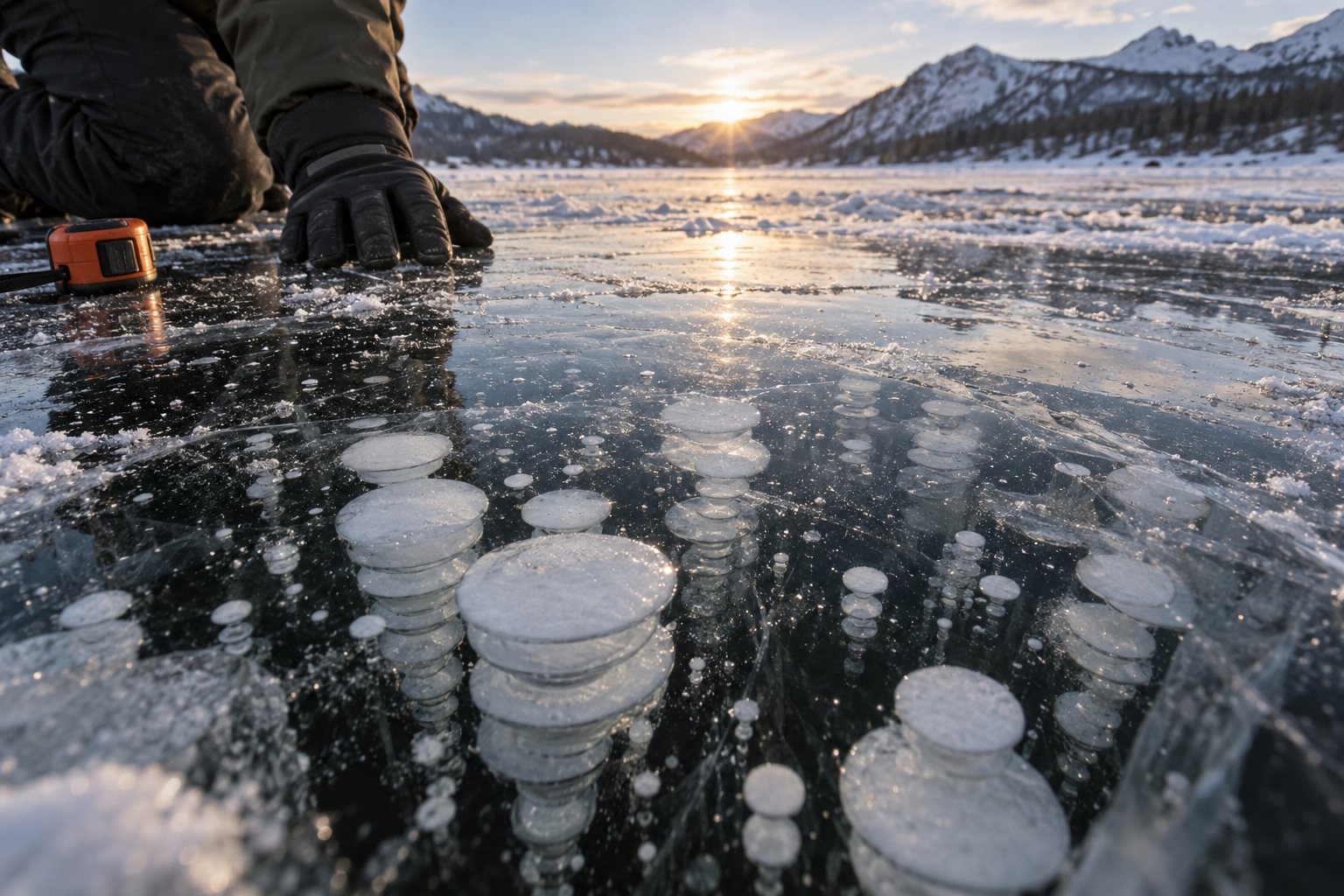
Kneel on the ice of Lake Merrow in January and you can read the winter beneath you. The bubbles stack in white discs, one above another, each layer frozen in place a few days after the last. They are methane, released by the mud at the bottom of the lake as dead reeds and leaves rot. For eleven winters, a team from the Merrow Field Station has counted them, measuring the discs with a tape and drilling into the largest to catch the gas. “A bubble is a little message from the mud,” said Dr Hanne Vos, who leads the team. “The warmer the mud, the more it talks.” This year the first bubbles appeared in the second week of November, the earliest the station has recorded. The team’s estimate is that the lake released about a fifth more methane last winter than it did a decade ago. That matters beyond the lake. Methane traps far more heat than carbon…
Continued on p. 6 →