Methane frozen into the lake tells scientists how fast the marsh around it is warming. This year the bubbles came early.
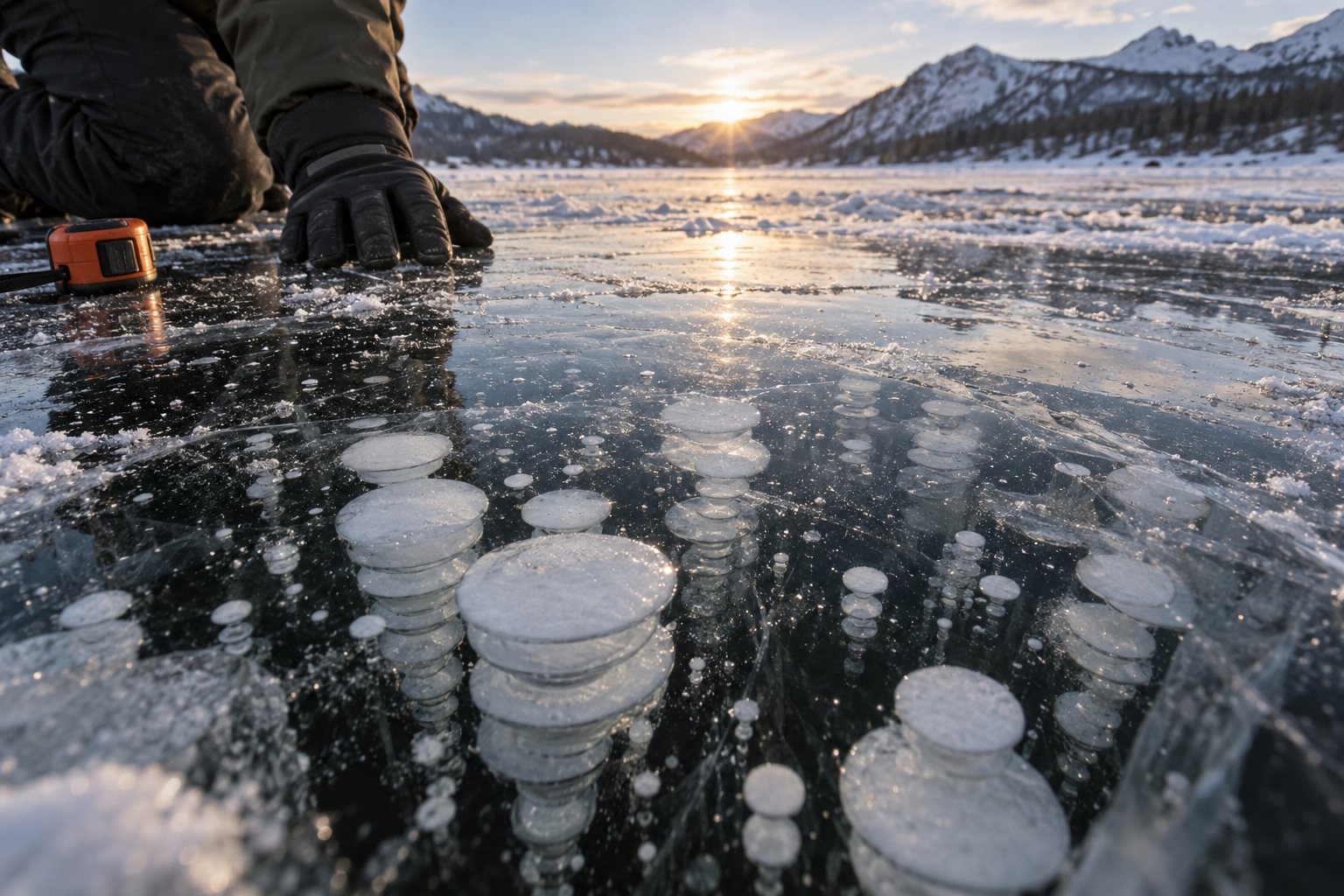
Kneel on the ice of Lake Merrow in January and you can read the winter beneath you. The bubbles stack in white discs, one above another, each layer frozen in place a few days after the last. They are methane, released by the mud at the bottom of the lake as dead reeds and leaves rot. For eleven winters, a team from the Merrow Field Station has counted them, measuring the discs with a tape and drilling into the largest to catch the gas. “A bubble is a little message from the mud,” said Dr Hanne Vos, who leads the team. “The warmer the mud, the more it talks.” This year the first bubbles appeared in the second week of November, the earliest the station has recorded. The team’s estimate is that the lake released about a fifth more methane last winter than it did a decade ago. That matters beyond the lake. Methane traps far more heat than carbon…
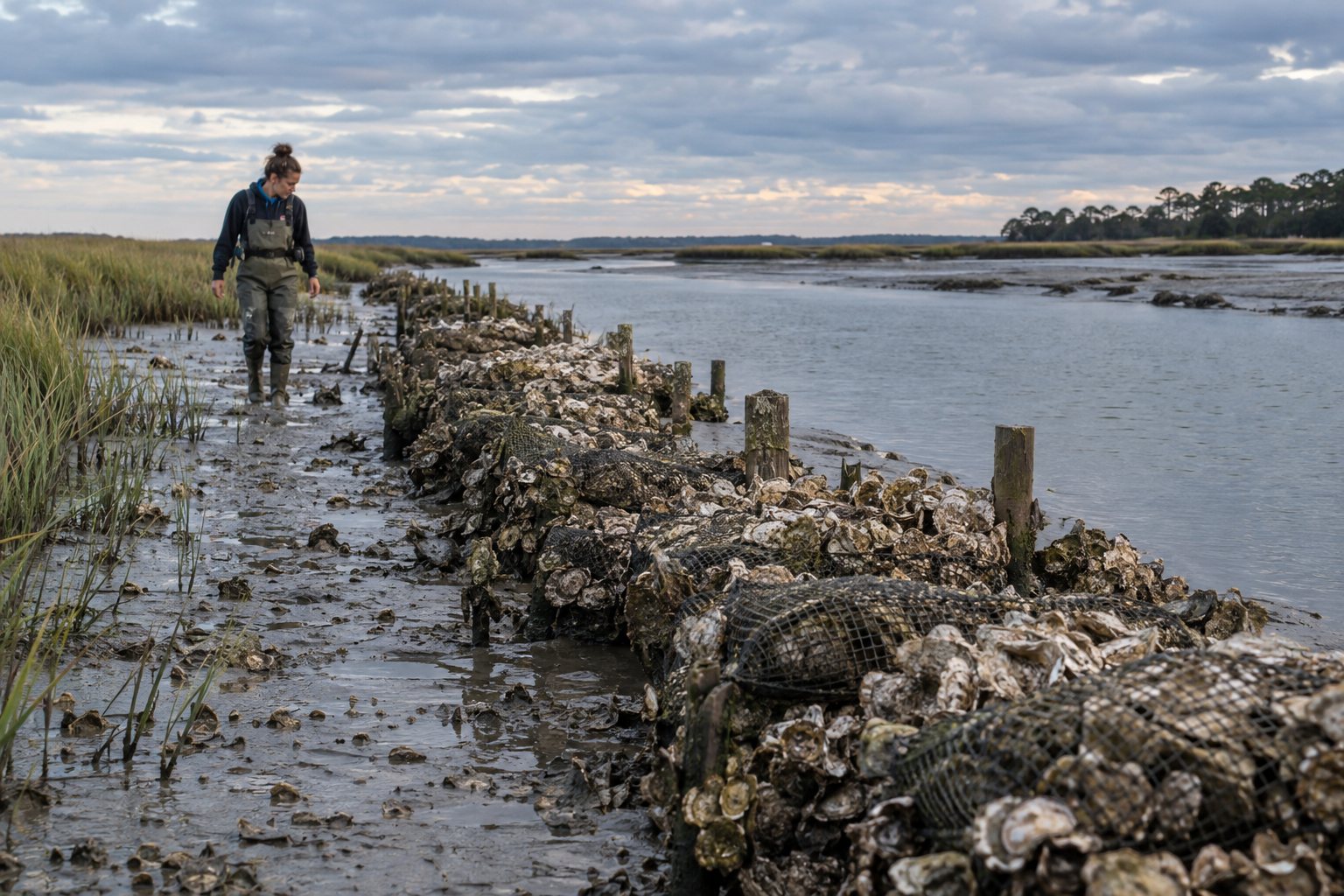
Continued on p. 6 →A living reef at low tide on the Merrow estuary. Mesh bags of recycled shell give young oysters something to grow on. AI-generated
Along the Merrow estuary, reefs built from old oyster shells are holding back the tide better than the concrete did.
Three years ago, volunteers laid six hundred mesh bags of oyster shell along the eastern bank of the Merrow estuary, where the old concrete wall had cracked and the marsh behind it was washing away. The shells came from the restaurants on the waterfront, which used to throw them away. Baby oysters settled on them within a season. Now the bags have vanished under a living reef that rises a few centimetres every year, by itself. Behind the reef, the marsh has stopped shrinking. In two places it has grown back. “Concrete is the strongest it will ever be on the day you pour it,” said Ana Brightwater, the engineer who designed the project. “A reef gets stronger every year it is alive.” The council is now pricing a reef for the western bank. It would cost a fifth of a new wall.