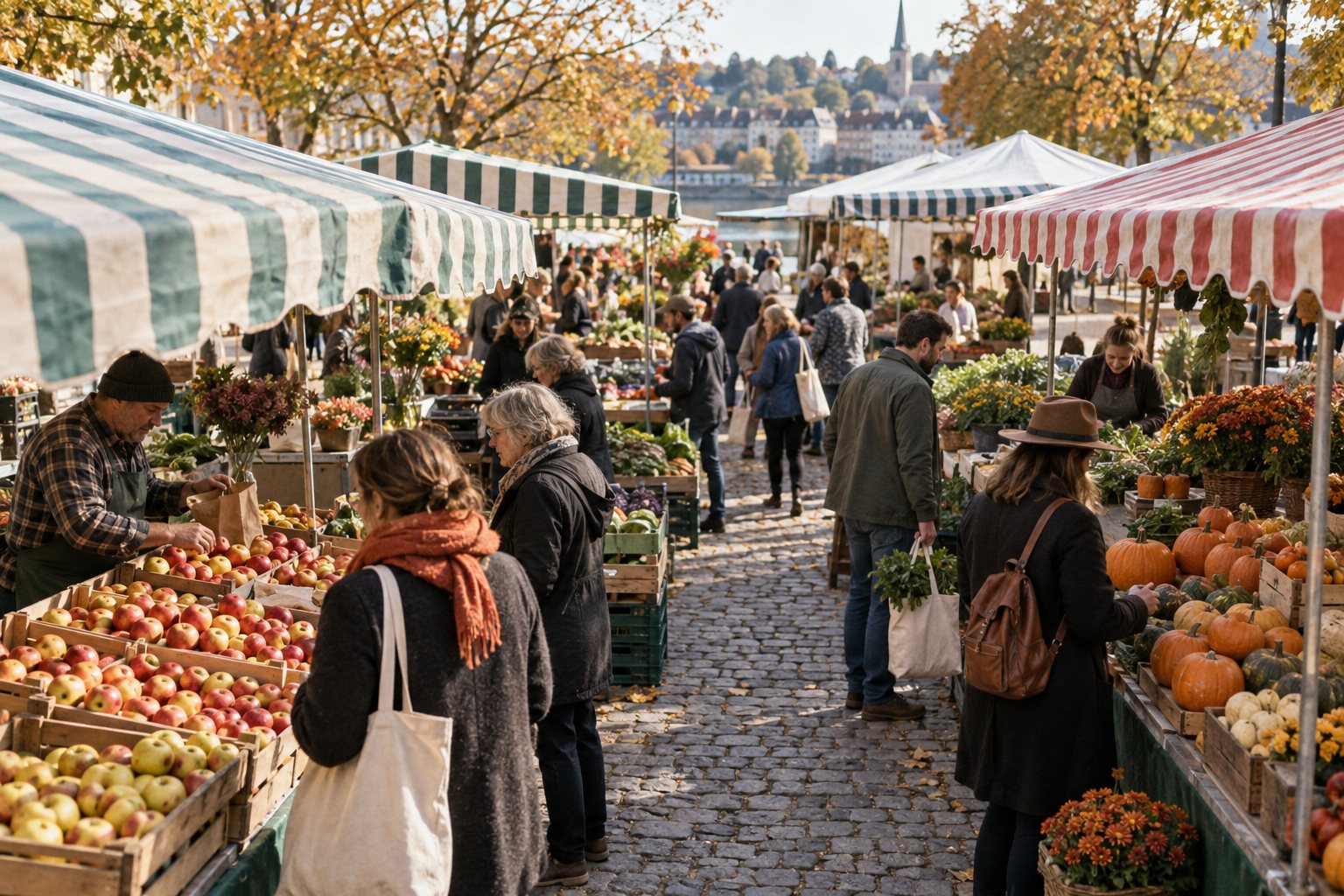
Exchange Square on a Saturday morning. AI-generated
The Saturday market on Exchange Square will also open on Thursday evenings from November to February, with lights and hot food. Thirty of its fifty traders have signed up.
Port Avery is an invented town. Its people, stories and places are made up to show this template working, and every picture, photographs and drawings alike, is AI-generated. Replace them all with your own.
-30-
Also in this edition
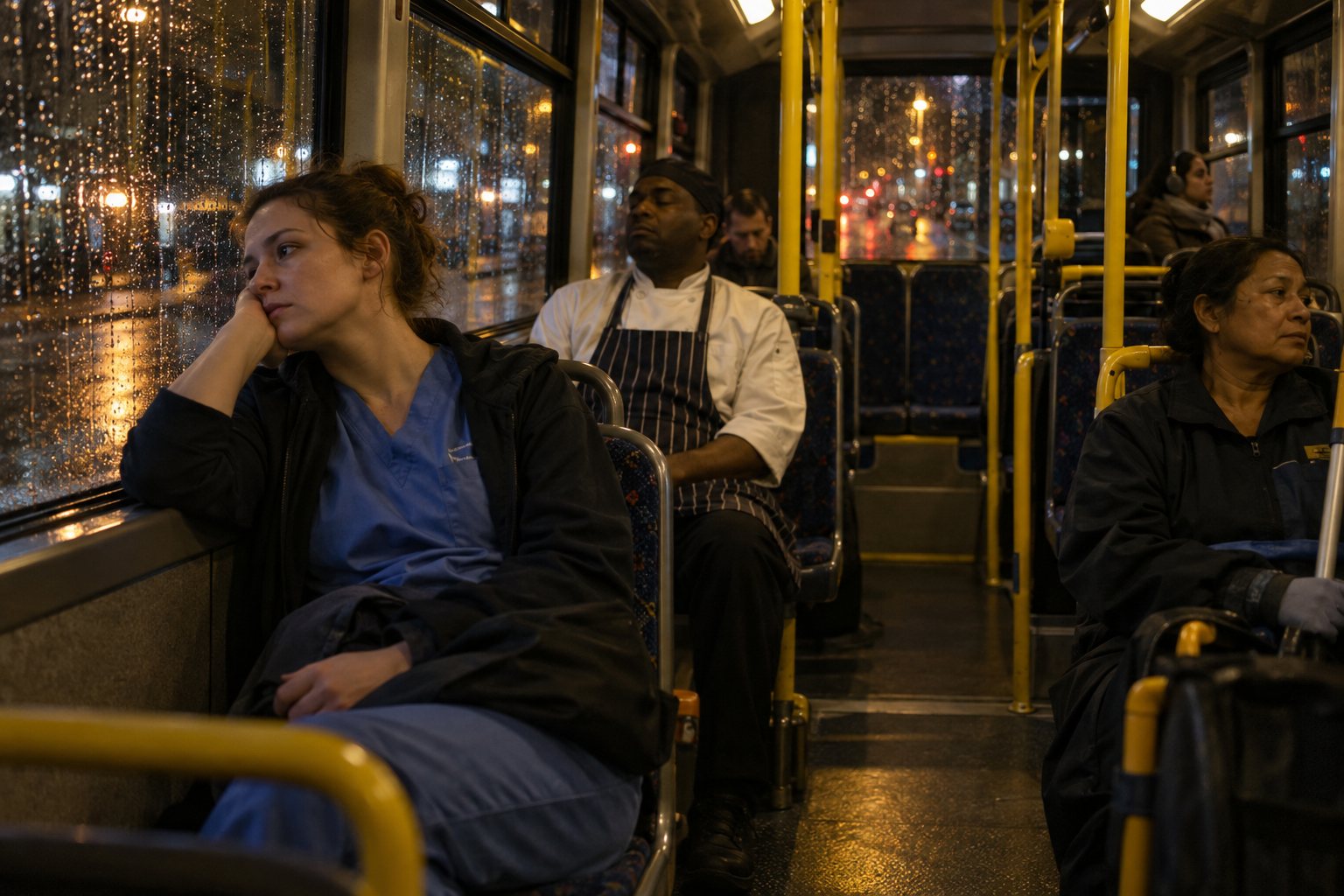
The N4 at Corn Exchange, 2.10 a.m. On weeknights, more than half of its riders are travelling to or from a shift. AI-generated
At ten past two on a Tuesday morning, the N4 pulls away from the Corn Exchange with every seat taken. A nurse coming off a late shift at St Bride’s sleeps against the window. Two cooks from the hotels on the waterfront share a bag of chips. A woman in a hi-vis jacket reads a paperback by the light over the door. None of them, the city council admits, is the passenger it had in mind. When Port Avery launched its all-night bus pilot in April, the plan was written around the weekend: students, concert crowds, people leaving the bars on Quay Street. The council paid for eleven nine Correction 19:05 routes, running every thirty minutes from midnight to five, and set itself a target of 1,200 journeys a night. The buses have averaged 2,460. The surprise is not the number but the timetable. The busiest hour is not one in the morning on a Saturday but half past four…
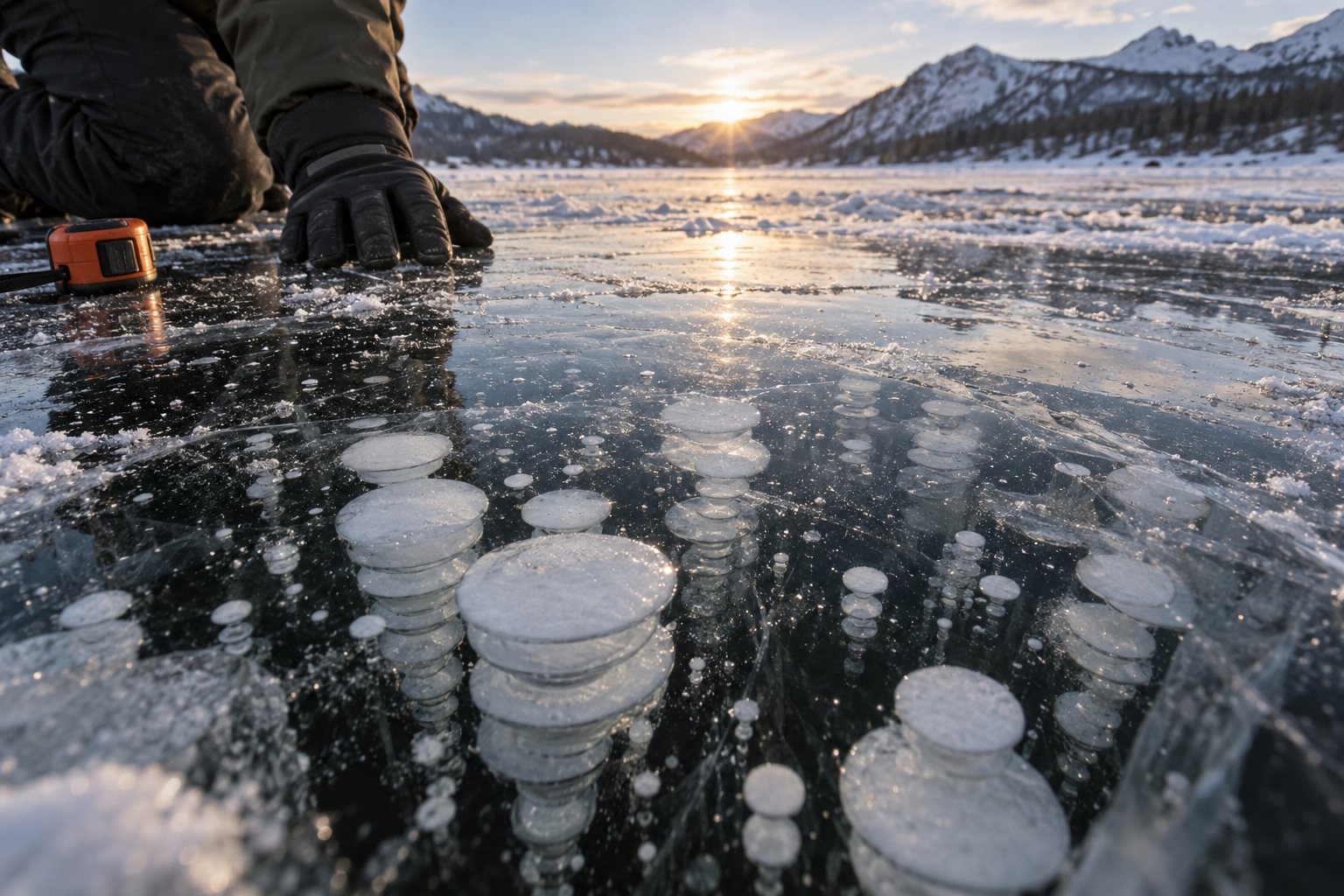
Continued on p. 2 →Methane bubbles trapped in layers of black ice on Lake Merrow. Each layer is a few days of the marsh breathing out. AI-generated
Kneel on the ice of Lake Merrow in January and you can read the winter beneath you. The bubbles stack in white discs, one above another, each layer frozen in place a few days after the last. They are methane, released by the mud at the bottom of the lake as dead reeds and leaves rot. For eleven winters, a team from the Merrow Field Station has counted them, measuring the discs with a tape and drilling into the largest to catch the gas. “A bubble is a little message from the mud,” said Dr Hanne Vos, who leads the team. “The warmer the mud, the more it talks.” This year the first bubbles appeared in the second week of November, the earliest the station has recorded. The team’s estimate is that the lake released about a fifth more methane last winter than it did a decade ago. That matters beyond the lake. Methane traps far more heat than carbon…
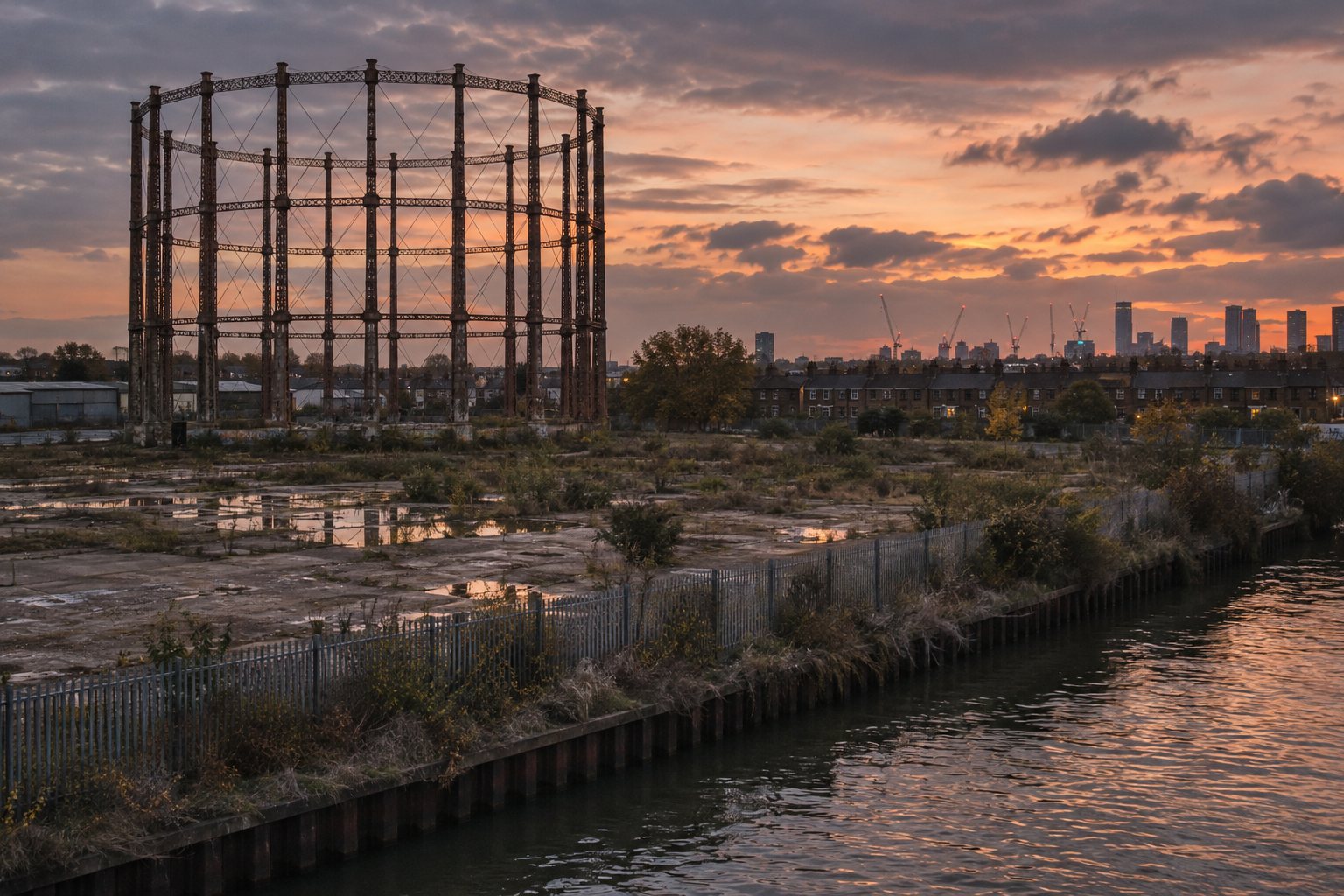
Continued on p. 6 →The gasworks site at dusk. The iron frame of the last holder would stay, with a park inside it. AI-generated
A plan to build 120 homes on the old gasworks site beside the Merrow goes to the council's planning committee next Tuesday, eleven years after the last gas holder was emptied. The site has been fenced off since 2015. The iron frame of the largest holder still stands over it, and the developer, Merrow Quay Homes, wants to keep it: the plans put a small park inside the ring of columns, with the flats arranged around it. Of the 120 homes, 36 would be offered at social rent, which is fewer than the forty percent the council's own policy asks for on large sites. The developer says the cost of cleaning the ground, which is thick with tar from a century of making gas from coal, makes the full share impossible. "We have opened every trial pit on this site," said the company's planning director, Ruth Okonedo. "We know exactly what is down there, and so does the council. It…
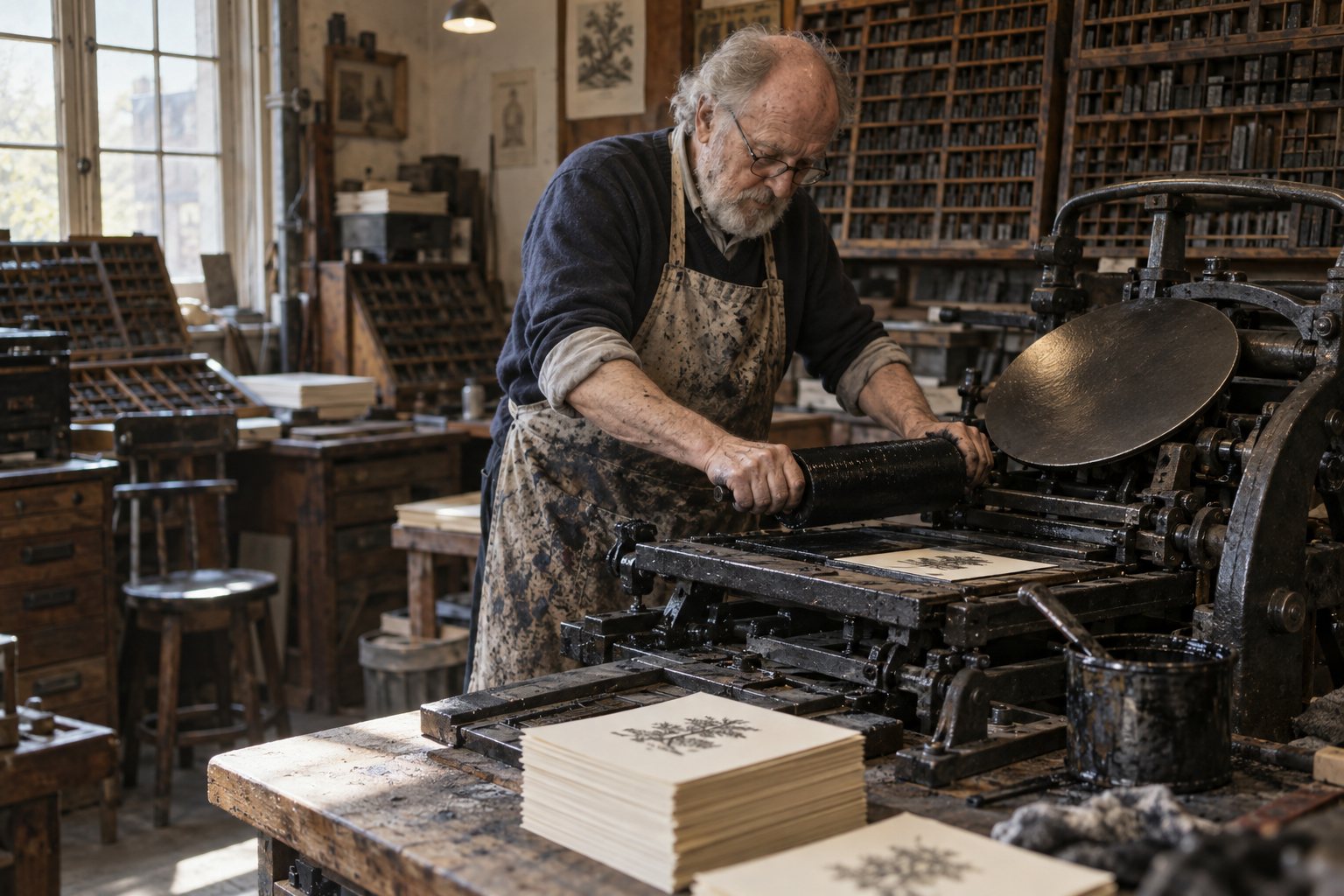
Continued on p. 2 →Elspeth Calder inks the 1958 platen press. Each colour on a card is a separate run through the machine. AI-generated
The press in the back room of Calder & Daughter weighs a little over a tonne and was cast in 1958. Elspeth Calder, who is seventy-three, can tell from the sound of it whether the ink is too thick. Her father opened the shop in 1975, printing raffle tickets, menus and the order of service for half the funerals in the parish. When the copy shops arrived in the nineties, most of that work left. Calder kept the press because, she says, it was too heavy to move. Now the work has come back, for a reason her father would not have believed: people want to feel the letters. The type bites into thick cotton paper and leaves a dent you can run your thumb across. The shop prints about sixty sets of wedding invitations a year and has stopped taking bookings for next summer. Each card goes through the press once per colour. A set of a hundred and…