Inside

  • the night buses
  • the gasworks vote
  • letters
  • what's on
The Port Avery Courier
No. 215Wednesday14 October2026

The weather

fog on the northern quay by mid-afternoon, clearing after nine. High tide 14:52. Bring a coat to the football.

Port Avery's weekly paperWednesday edition · £1.20 in shops · free online

The Port Avery Courier, Wednesday edition, No. 215

Transport

The night buses are full. The city wants to know who is riding them.

A six-month pilot of all-night routes has carried twice the passengers anyone expected. Most of them are on their way to work.
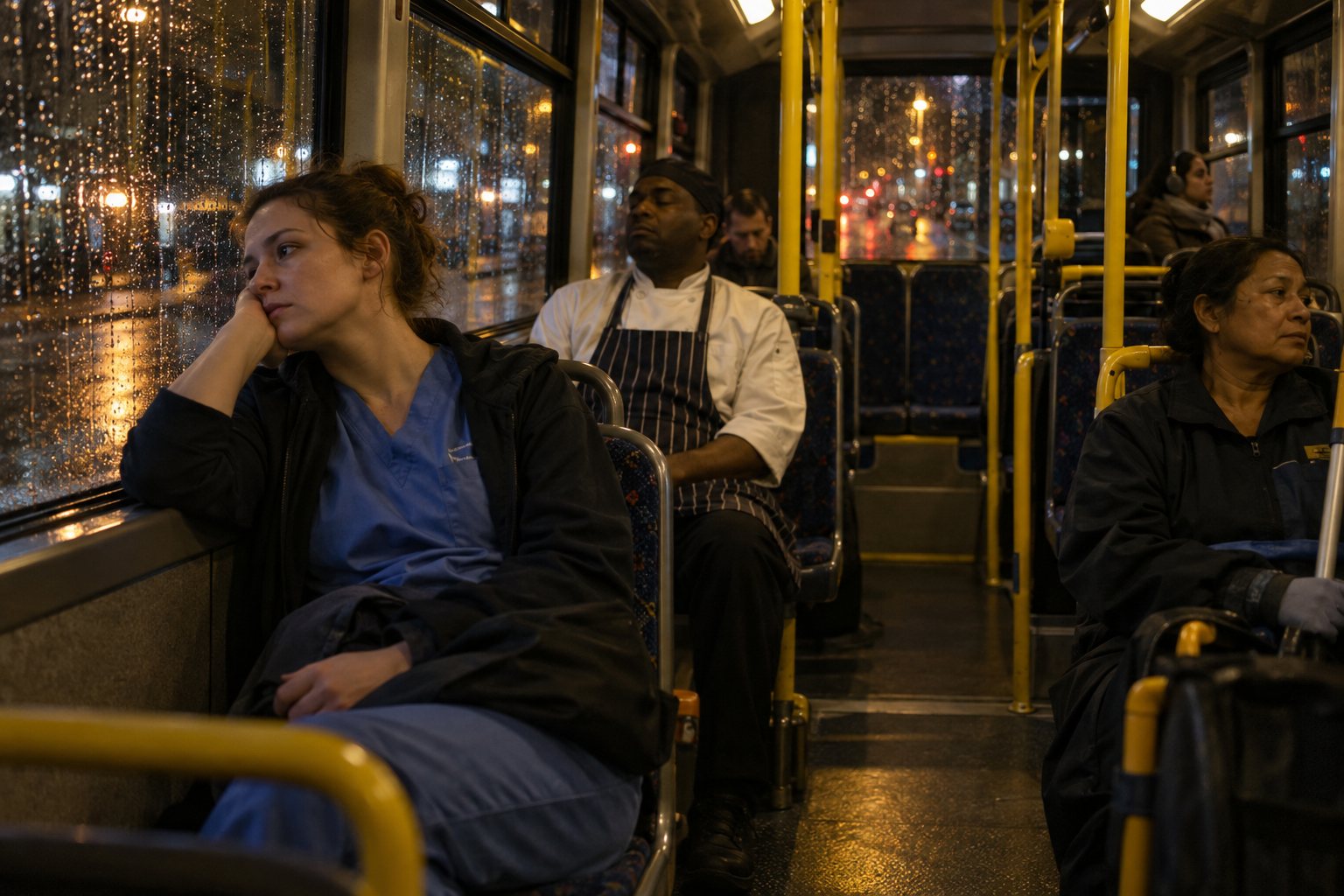
The N4 at Corn Exchange, 2.10 a.m. On weeknights, more than half of its riders are travelling to or from a shift. AI-generated

At ten past two on a Tuesday morning, the N4 pulls away from the Corn Exchange with every seat taken. A nurse coming off a late shift at St Bride’s sleeps against the window. Two cooks from the hotels on the waterfront share a bag of chips. A woman in a hi-vis jacket reads a paperback by the light over the door.

None of them, the city council admits, is the passenger it had in mind.

When Port Avery launched its all-night bus pilot in April, the plan was written around the weekend: students, concert crowds, people leaving the bars on Quay Street. The council paid for elevennine routes, running every thirty minutes from midnight to five, and set itself a target of 1,200 journeys a night.

The buses have averaged 2,460.

The surprise is not the number but the timetable. The busiest hour is not one in the morning on a Saturday but half past four on a weekday, when the early shifts begin: bakers, cleaners, care workers, the crews who load the ferries before dawn.

“We thought we were running a nightlife service,” said Councillor Marion Teale, who chairs the transport committee. “It turns out we were running a commuter service that nobody had ever counted.”

It turns out we were running a commuter service that nobody had ever counted.

For riders like Amara Delacroix, who cleans offices on the business park from five until nine, the pilot replaced a forty-minute walk in the dark. “Before April I left home at quarter past four,” she said. “Now I leave at twenty to five, and I sit down.”

The pilot costs £38,000 a month and is paid for until the end of March. The council says it cannot keep the routes without a share of the regional transport fund, and it wants evidence before it asks.

That is what the survey is for. Every stop on the nine routes now carries a card with a short questionnaire and a number to text; drivers hand them out on the first and last runs. The survey closes on ThursdayFriday.

A council spokesperson said on Tuesday evening that “no decision has been taken” on funding after March, and that the survey results will be published in full.

Not everyone is grateful. Several riders said the thirty-minute gap was too long in the coldest months, and that the shelters on the outer routes have no lighting. Others asked why the buses stop at five, when the first day service does not start until half past six on Sundays.

On the N4, the woman in the hi-vis jacket closed her book as the bus turned onto the ring road. Asked what she would write on the card, she thought about it for a whole stop.

“Don’t take it away,” she said. “That’s all. Just don’t take it away.”
Continued on p. 2 →
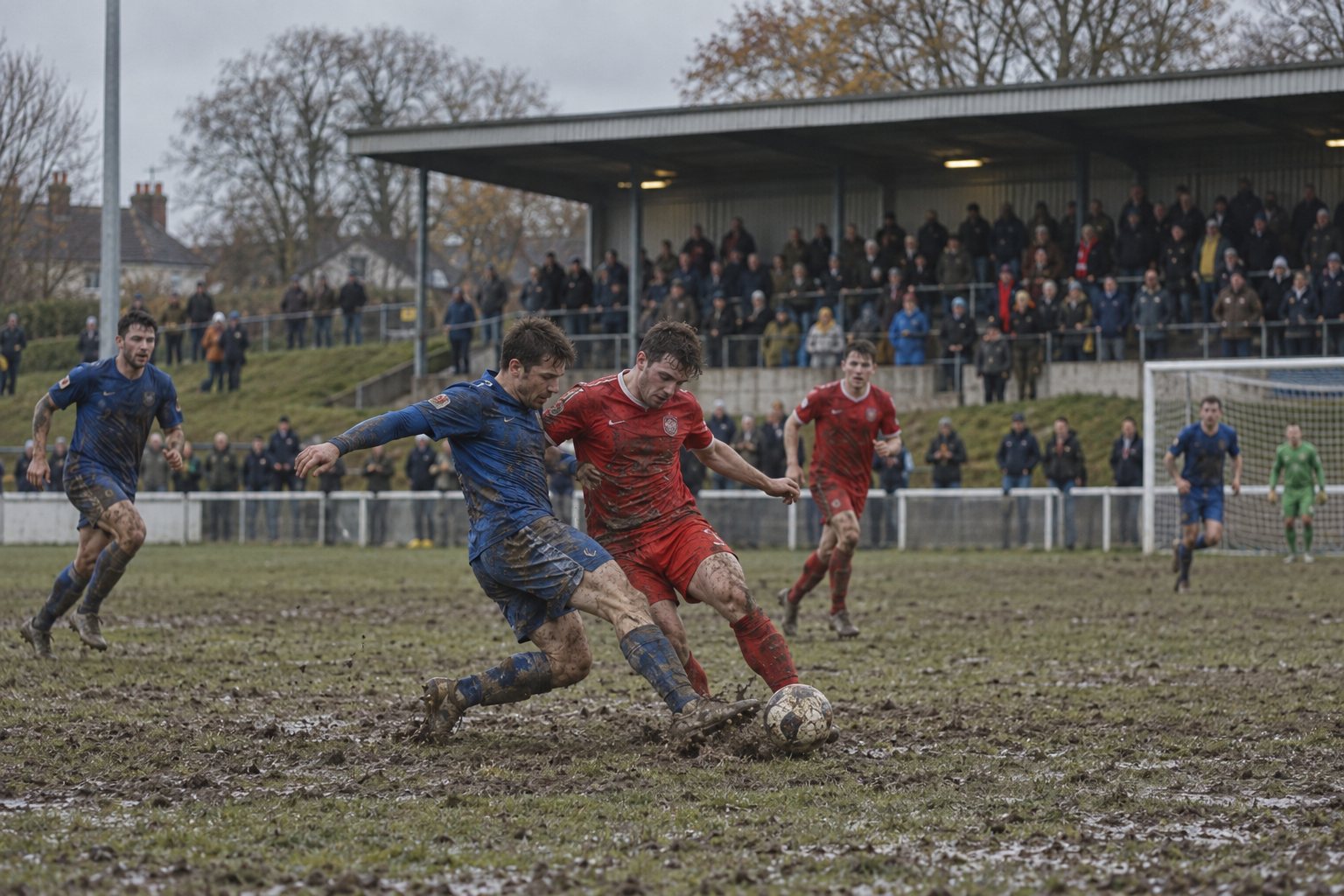
Halden Park on Saturday, before the rain set in for good. AI-generated

Football

Rovers come from two down to draw at Halden

A nineteen-year-old who works mornings at the fish market changed the game in twenty minutes.

For seventy minutes at Halden Park on Saturday, Port Avery Rovers looked like a team that had spent the week reading about their new stand rather than training in front of it. They were two goals down by half-time, the second a header that their keeper, Danny Rourke, watched sail over him with his hands on his hips. The travelling supporters, about three hundred of them under the away end's leaking roof, sang the song about the ferry anyway. Then Kieran Asante came on. The nineteen-year-old, who works mornings at the fish market and trains in the evenings, scored with his second touch, a low shot from the edge of the box that went in off the post. Eleven minutes later he crossed for Sam Whitlow to head the equaliser. "I told him to run at them and not to think," said the manager, Gail Pennock. "He doesn't think. It's his best quality." I told him to run at them…

Continued on p. 7 →
The reading hour at Kestrel Primary. Comics count. Phones do not. AI-generated

Schools

The school that swapped homework for a reading hour

Every afternoon at Kestrel Primary, four hundred children and the caretaker stop and read. A year on, the results are in.

At quarter past two every afternoon, Kestrel Primary goes quiet. Four hundred children, their teachers, the caretaker and the two women in the office stop what they are doing and read a book. Any book, as long as it is made of paper. The school dropped written homework for its younger classes last September and gave the time back to the school day. The reading hour is in fact forty minutes, which the head teacher, Femi Adeyemi, says is the longest a seven-year-old can sit still "without a crisis". The school measures reading every term, as all schools do. In the year since the change, the share of seven-year-olds reading at the expected level has risen from 61 to 74 percent. Mr Adeyemi is careful not to claim it is all the reading hour. "We also bought a lot of books," he said. Parents are mostly in favour. A few miss the homework. "It was the only time I knew…

Continued on p. 2 →
Penhaligon's on Harbour Street, before the boats come in. AI-generated

Obituary

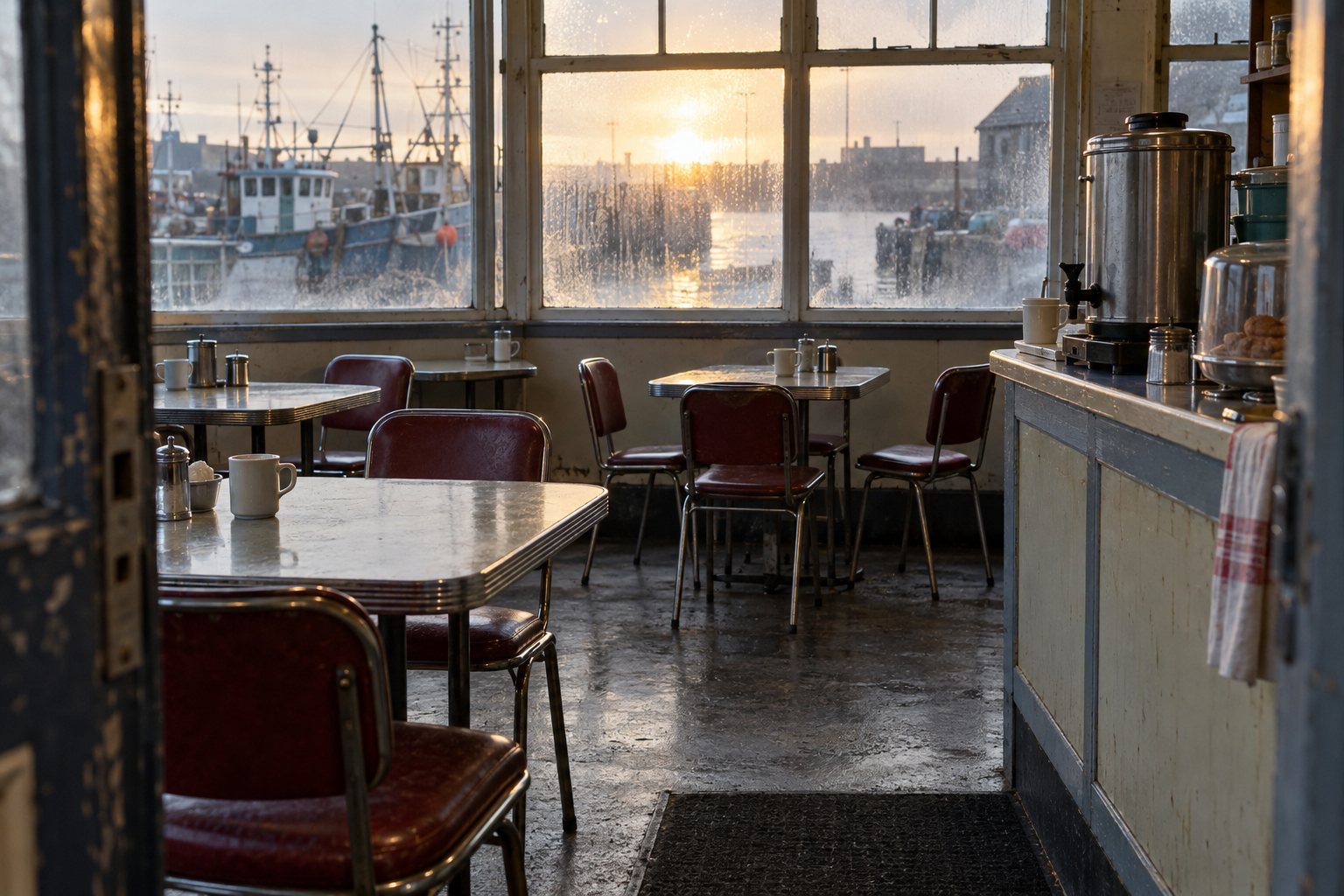
Ruth Penhaligon, who opened the harbour café at half past four for forty-one years

She kept the fishermen's tabs in a school exercise book and never once asked for the money.

For forty-one years, if you were on Harbour Street before six in the morning, the only light on was at Penhaligon's. Ruth Penhaligon, who has died aged eighty-four, opened the café at half past four for the boats and closed it at two, when she said the tea went stale and so did the conversation. She was born in a house on Chapel Row, the daughter of a crab fisherman, and took over the café from an aunt in 1979 with, she said, "a tea urn, eleven tables and a debt". She paid off the debt in six years and never changed the tables. Fishermen ran up tabs that lasted whole seasons. She kept them in a school exercise book and never once, according to her son Mark, asked for the money. "She knew everybody would pay when the fish came in," he said. "And they did. Mostly." She knew everybody would pay when the fish came in. And they…

Continued on p. 5 →
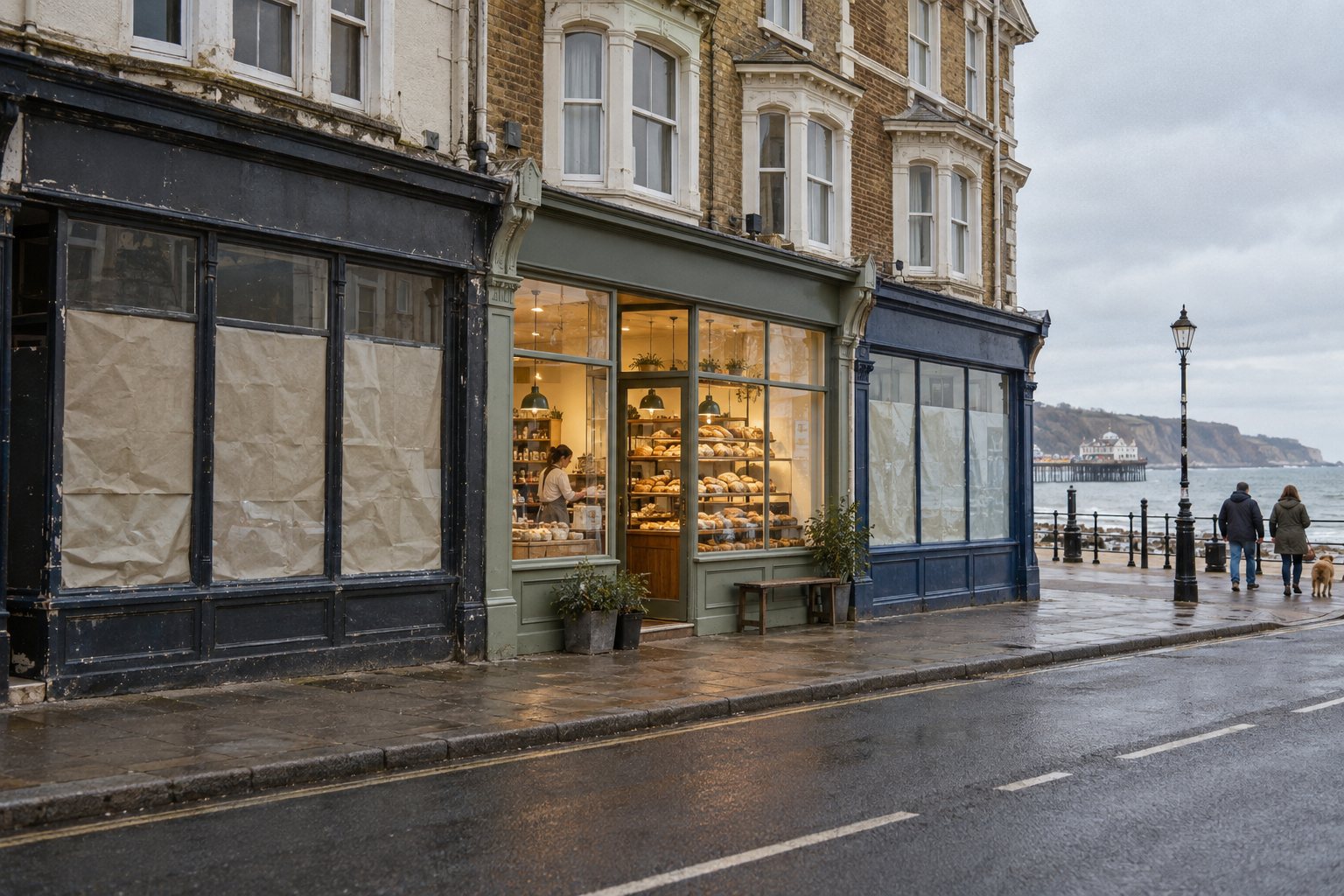
The lower end of Harbour Street. Seven of these windows have been empty since the spring. AI-generated

High street

Harbour Street's empty shops get a six-month rent holiday

Seven units, no rent until July, and a short list of things the council does not want to see in them.

Seven empty shops on the lower end of Harbour Street will be let rent-free for six months from January, under a scheme the council hopes will fill the gaps that have opened since the bank and two charity shops closed. The council owns four of the units. The other three belong to a pension fund, which has agreed to take part in return for the council paying the business rates while the trial lasts. Applicants must open at least five days a week and must not be a vape shop, a betting shop or, at the insistence of one councillor, "another place selling candles". Thirty-eight people had applied by Tuesday. They include a cobbler, a children's bookshop, a bicycle repair co-operative and a woman who wants to open a shop selling only things made in Port Avery. "Which is mostly fish and jam," she said, "but there is more than you think." The scheme costs the council about £40,000. Similar…

Continued on p. 4 →
The inshore lifeboat on exercise in the bay. All of its crew are volunteers. AI-generated

Harbour

Three calls in one night for the lifeboat crew

A drifting yacht, a lost dog and a fishing boat bailing with a bucket, between ten at night and five in the morning.

The volunteer crew of the Port Avery lifeboat were called out three times between ten on Sunday night and five on Monday morning, the busiest night the station has had since 2019. The first call was to a yacht with a fouled propeller drifting towards the rocks off Gull Point. The crew towed it into the harbour. The second, just after one, was a false alarm: a light on the cliffs that turned out to be a man looking for his dog. The third was to a fishing boat taking on water three miles out, whose two crew were bailing with a bucket when the lifeboat reached them. "We pumped her out and walked her home," said the helm, Jess Tregarthen, who in the daytime works at the building society on Exchange Square. She went to work on Monday at nine. We pumped her out and walked her home. The station's crew of twenty-four are all volunteers. It is recruiting,…

Continued on p. 2 →
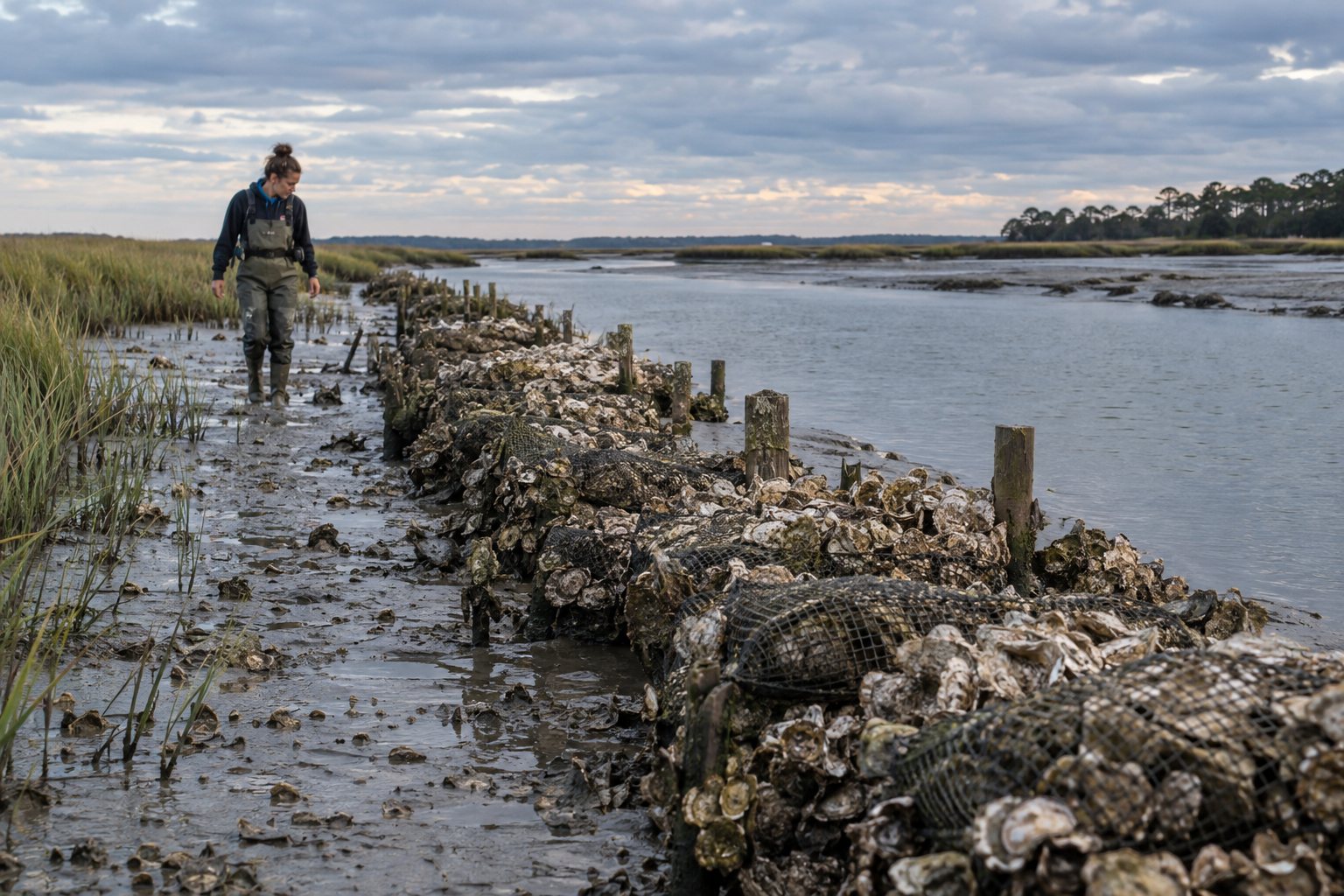
A living reef at low tide on the Merrow estuary. Mesh bags of recycled shell give young oysters something to grow on. AI-generated

Coasts

The sea wall that grows itself

Along the Merrow estuary, reefs built from old oyster shells are holding back the tide better than the concrete did.

Three years ago, volunteers laid six hundred mesh bags of oyster shell along the eastern bank of the Merrow estuary, where the old concrete wall had cracked and the marsh behind it was washing away. The shells came from the restaurants on the waterfront, which used to throw them away. Baby oysters settled on them within a season. Now the bags have vanished under a living reef that rises a few centimetres every year, by itself. Behind the reef, the marsh has stopped shrinking. In two places it has grown back. “Concrete is the strongest it will ever be on the day you pour it,” said Ana Brightwater, the engineer who designed the project. “A reef gets stronger every year it is alive.” The council is now pricing a reef for the western bank. It would cost a fifth of a new wall.

Continued on p. 6 →
The morning delivery at a shop on Alder Road. The loaves arrive before the newspapers. AI-generated

High street

Why every corner shop now sells sourdough

Five years ago, a loaf of sourdough in Port Avery meant a trip to the market on a Saturday. Today it sits on the counter of forty corner shops, next to the milk. The change was not planned by anyone. It began when the three small bakeries on the east side, each too small to run its own van, agreed to share one. Shopkeepers who had never stocked bread worth more than a pound found that a £4.50 loaf sold out by nine. “It brings people in,” said Hassan Qureshi, whose shop on Alder Road takes twelve loaves a day. “Nobody comes in for a newspaper any more. They come in for the bread and they buy a newspaper.” The shared van now leaves the Mill Lane bakery at four. Its driver, Joe Ferris, knows every back door on the route.

Continued on p. 4 →
Read, folded, left for the next person. AI-generated

Column

In praise of the slow update

My grandfather read the paper twice a day, once at breakfast and once after supper, and he was the best-informed man I have ever known. He did not know things first. He knew them properly. By the time the evening edition reached him, the rumours of the morning had been checked, the numbers corrected and the quotes put back in their context. What arrived on his doormat had been allowed to settle. We have lost that, and I think we can have it back. Not by reading less, but by reading in editions: a morning and an evening, a beginning and an end, with the corrections printed underneath where everyone can see them. The news will keep. Most of it, anyway. Let it settle.

Continued on p. 8 →

Ask the Courier

Ask the Courier: why do the bells ring at quarter past nine?

Why do the bells of St Anne's ring at quarter past nine on Sunday mornings, when the service starts at ten? (Asked by Pat, Chapel Row.) Because quarter past nine is when the ringers arrive, Pat. The bells are rung by a team of eight volunteers who climb sixty-one steps to the ringing chamber, and they ring for forty-five minutes before the service. The habit is older than the church clock. Before most houses had one, the bells were how the town knew to set off: the first peal meant leave now, the last meant you were late. The ringers keep the timing out of habit, and because the tower captain, Gerald Mabey, says changing it would "confuse the pigeons". The team is short of two ringers. Practice is on Wednesday evenings and no musical ability is required, Mr Mabey says, only the ability to count to eight and to stop when told. Got a question about Port Avery? Write…

Continued on p. 9 →

Letters

Letters to the editor

I ride the N4 home after a late shift three nights a week. Please tell the council that the buses are not a luxury. Before April I was paying £14 for a taxi I could not afford. Now I pay £2 and I sleep on the way home. (Name supplied, Fiveways) The gas holder is the ugliest object in Port Avery and I have looked at it from my kitchen for thirty-one years. Keeping it as a "heritage feature" is like framing a scar. (Doreen Lyle, Foundry Lane) I disagree with the letter you will no doubt print from Foundry Lane. The holder is the only thing on that side of the river that anyone could draw from memory. (Tom Ashworth, Mill Lane) Your piece on the corner-shop sourdough did not mention the price. £4.50 is a lot for a loaf. It is very good bread. It is still a lot. (R. Hosking, Alder Road) Letters may be shortened. Write…

Continued on p. 9 →

Listings

What's on this week

Thursday. Lifeboat station open evening, 7 pm, the slipway. Tea, and a chance to sit in the boat. Friday. Funeral of Ruth Penhaligon, St Anne's, 11 am. Penhaligon's closed until 2 pm. Saturday. Rovers v Ashby Town, Riverside Park, 3 pm: the first game in front of the new east stand. Market on Exchange Square, 8 am to 2 pm. Sunday. Bell-ringing, St Anne's, 9.15 am (see Ask the Courier). Guided walk along the old tram line, meet at the depot gates, 10 am, two hours, free. Tuesday. Planning committee on the gasworks site, council chamber, 6 pm. The public gallery seats forty; arrive early. Wednesday. Bell practice, St Anne's tower, 7.30 pm. Beginners welcome. Bring soft shoes.

Continued on p. 9 →

Classifieds

LOST. Grey cat, answers to Biscuit, or does not. Last seen on the wall behind Chapel Row. Reward in fish.

PIANO LESSONS. Patient teacher, any age, any level, Thursday afternoons. Your piano or mine.

ALLOTMENT. Half plot on the Mill Lane site, shared, for someone who likes beans more than I do.

FOR SALE. Child's bicycle, red, outgrown in one summer. £20 or a good home.

WANTED. Two bell-ringers. See Ask the Courier. No experience necessary; stamina helpful.

THANK YOU to whoever handed in my wallet at the ferry office, with every card and the photograph still in it.

-30-