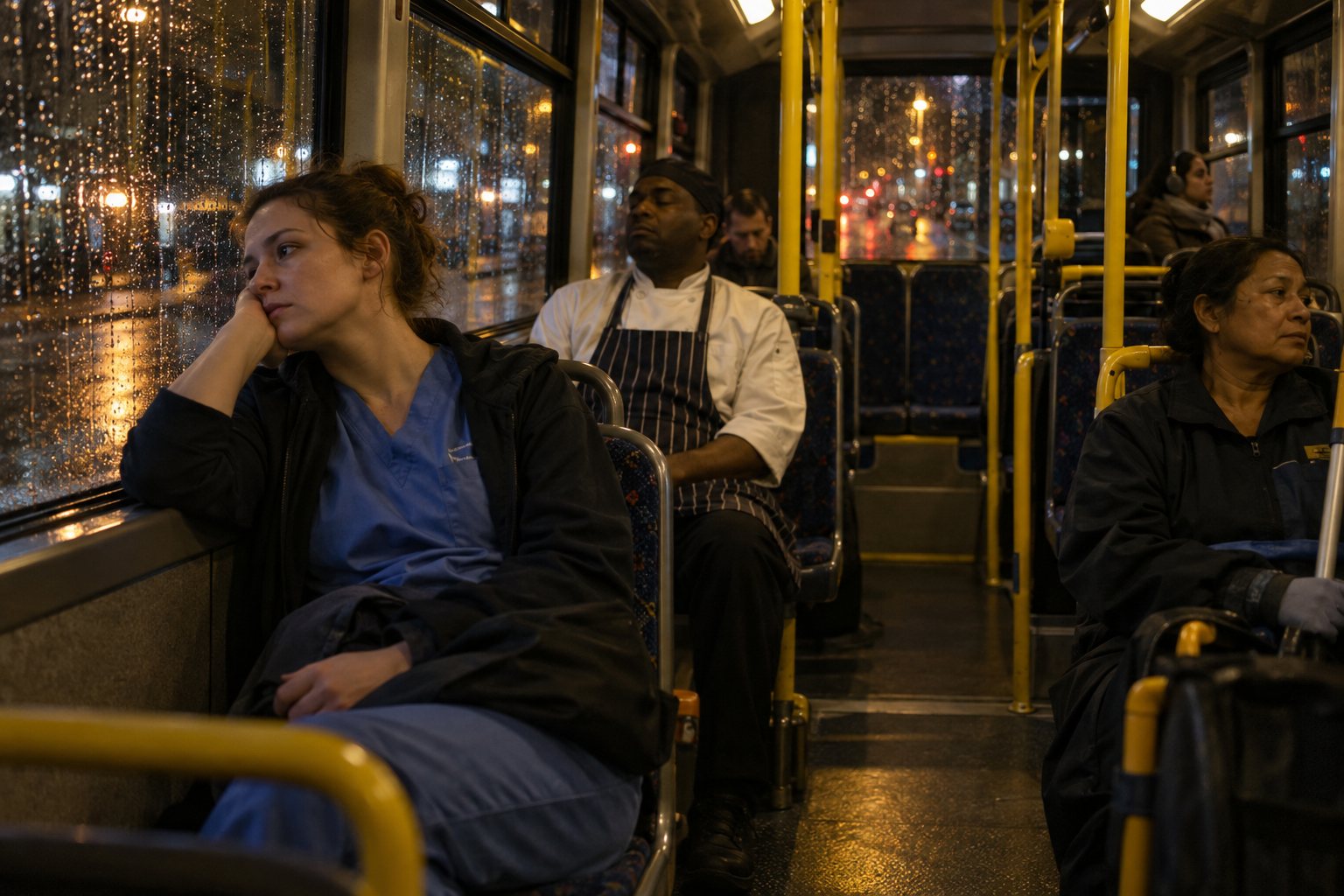
At ten past two on a Tuesday morning, the N4 pulls away from the Corn Exchange with every seat taken. A nurse coming off a late shift at St Bride’s sleeps against the window. Two cooks from the hotels on the waterfront share a bag of chips. A woman in a hi-vis jacket reads a paperback by the light over the door.
None of them, the city council admits, is the passenger it had in mind.
When Port Avery launched its all-night bus pilot in April, the plan was written around the weekend: students, concert crowds, people leaving the bars on Quay Street. The council paid for elevennineCorrection 19:05 routes, running every thirty minutes from midnight to five, and set itself a target of 1,200 journeys a night.
The buses have averaged 2,460.
Who is on board
The surprise is not the number but the timetable. The busiest hour is not one in the morning on a Saturday but half past four on a weekday, when the early shifts begin: bakers, cleaners, care workers, the crews who load the ferries before dawn.
“We thought we were running a nightlife service,” said Councillor Marion Teale, who chairs the transport committee. “It turns out we were running a commuter service that nobody had ever counted.”
It turns out we were running a commuter service that nobody had ever counted.
For riders like Amara Delacroix, who cleans offices on the business park from five until nine, the pilot replaced a forty-minute walk in the dark. “Before April I left home at quarter past four,” she said. “Now I leave at twenty to five, and I sit down.”
The question of money
The pilot costs £38,000 a month and is paid for until the end of March. The council says it cannot keep the routes without a share of the regional transport fund, and it wants evidence before it asks.
That is what the survey is for. Every stop on the nine routes now carries a card with a short questionnaire and a number to text; drivers hand them out on the first and last runs. The survey closes on ThursdayFridayCorrection 19:40.
A council spokesperson said on Tuesday evening that “no decision has been taken” on funding after March, and that the survey results will be published in full.Added 20:15
What the riders say
Not everyone is grateful. Several riders said the thirty-minute gap was too long in the coldest months, and that the shelters on the outer routes have no lighting. Others asked why the buses stop at five, when the first day service does not start until half past six on Sundays.
On the N4, the woman in the hi-vis jacket closed her book as the bus turned onto the ring road. Asked what she would write on the card, she thought about it for a whole stop.
“Don’t take it away,” she said. “That’s all. Just don’t take it away.”
Port Avery is an invented town. Its people, stories and places are made up to show this template working, and every picture, photographs and drawings alike, is AI-generated. Replace them all with your own.
-30-