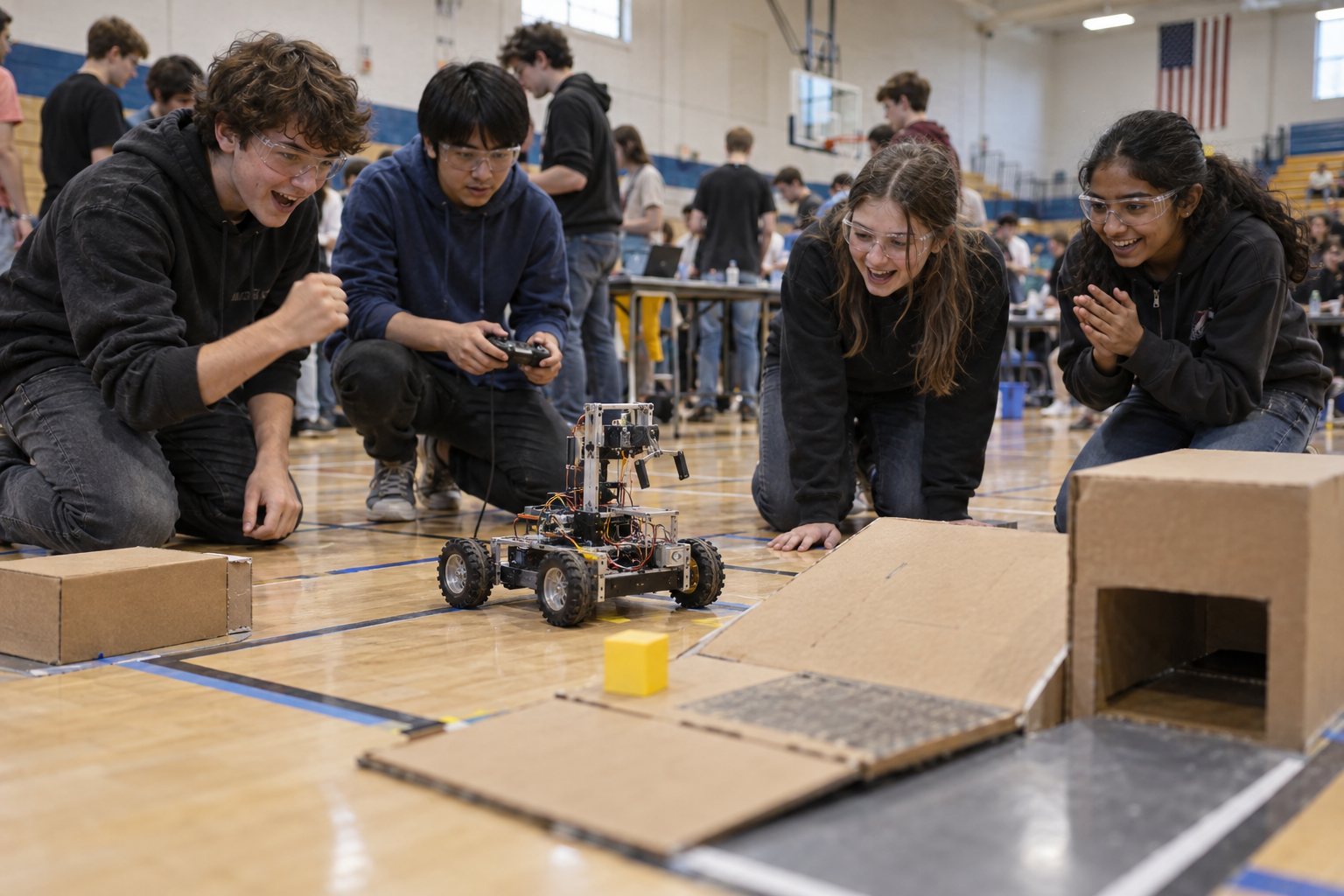
Ashgrove Academy's robot, built from a vacuum cleaner motor and a cereal box. AI-generated
A robot built from a vacuum cleaner motor and a cereal box won the regional schools final for Ashgrove Academy on Tuesday. The team of five goes to the national round in March.
Port Avery is an invented town. Its people, stories and places are made up to show this template working, and every picture, photographs and drawings alike, is AI-generated. Replace them all with your own.
-30-
Also in this edition
Methane bubbles trapped in layers of black ice on Lake Merrow. Each layer is a few days of the marsh breathing out. AI-generated
Kneel on the ice of Lake Merrow in January and you can read the winter beneath you. The bubbles stack in white discs, one above another, each layer frozen in place a few days after the last. They are methane, released by the mud at the bottom of the lake as dead reeds and leaves rot. For eleven winters, a team from the Merrow Field Station has counted them, measuring the discs with a tape and drilling into the largest to catch the gas. “A bubble is a little message from the mud,” said Dr Hanne Vos, who leads the team. “The warmer the mud, the more it talks.” This year the first bubbles appeared in the second week of November, the earliest the station has recorded. The team’s estimate is that the lake released about a fifth more methane last winter than it did a decade ago. That matters beyond the lake. Methane traps far more heat than carbon…
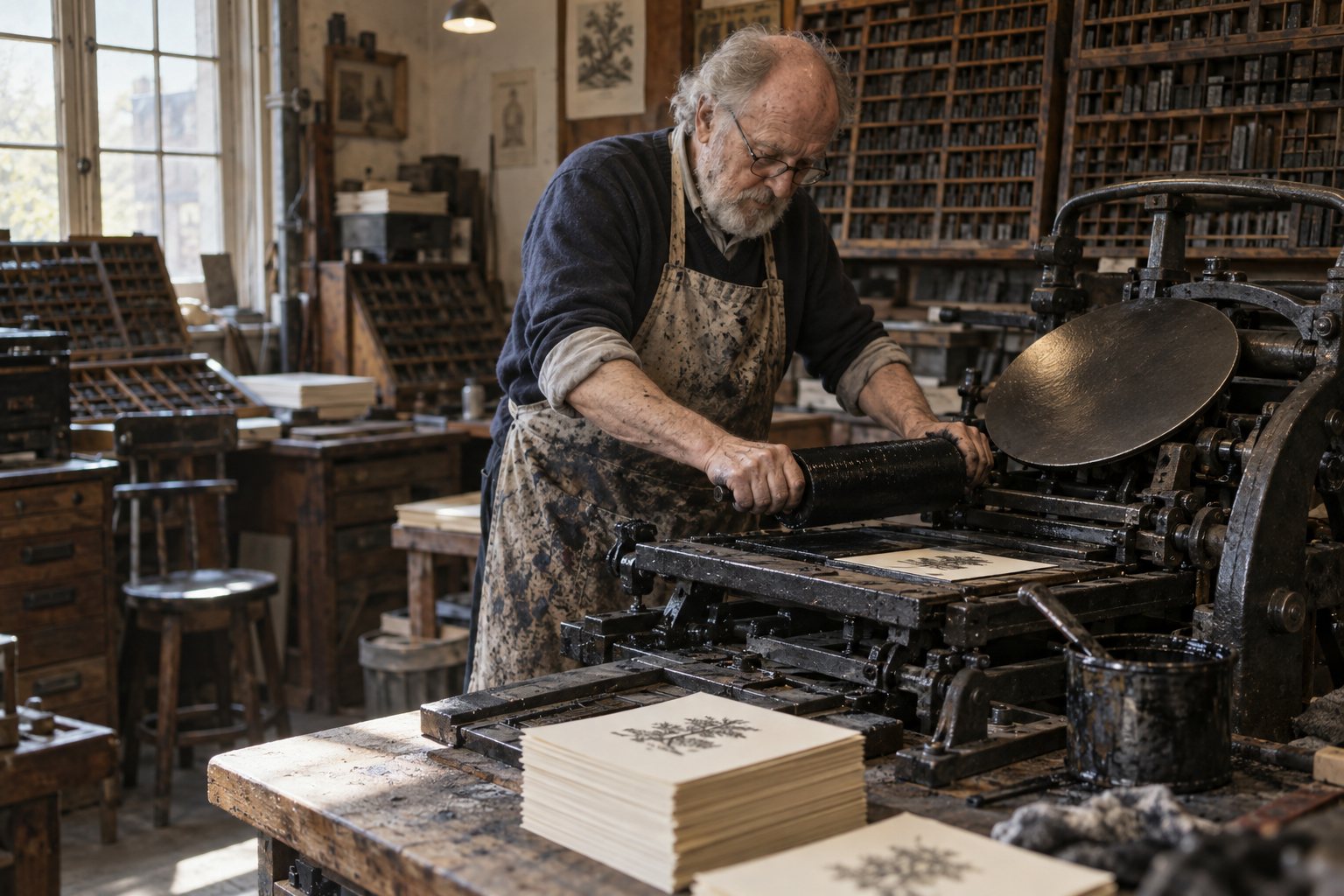
Continued on p. 6 →Elspeth Calder inks the 1958 platen press. Each colour on a card is a separate run through the machine. AI-generated
The press in the back room of Calder & Daughter weighs a little over a tonne and was cast in 1958. Elspeth Calder, who is seventy-three, can tell from the sound of it whether the ink is too thick. Her father opened the shop in 1975, printing raffle tickets, menus and the order of service for half the funerals in the parish. When the copy shops arrived in the nineties, most of that work left. Calder kept the press because, she says, it was too heavy to move. Now the work has come back, for a reason her father would not have believed: people want to feel the letters. The type bites into thick cotton paper and leaves a dent you can run your thumb across. The shop prints about sixty sets of wedding invitations a year and has stopped taking bookings for next summer. Each card goes through the press once per colour. A set of a hundred and…
Continued on p. 5 →Halden Park on Saturday, before the rain set in for good. AI-generated
For seventy minutes at Halden Park on Saturday, Port Avery Rovers looked like a team that had spent the week reading about their new stand rather than training in front of it. They were two goals down by half-time, the second a header that their keeper, Danny Rourke, watched sail over him with his hands on his hips. The travelling supporters, about three hundred of them under the away end's leaking roof, sang the song about the ferry anyway. Then Kieran Asante came on. The nineteen-year-old, who works mornings at the fish market and trains in the evenings, scored with his second touch, a low shot from the edge of the box that went in off the post. Eleven minutes later he crossed for Sam Whitlow to head the equaliser. "I told him to run at them and not to think," said the manager, Gail Pennock. "He doesn't think. It's his best quality." I told him to run at them…
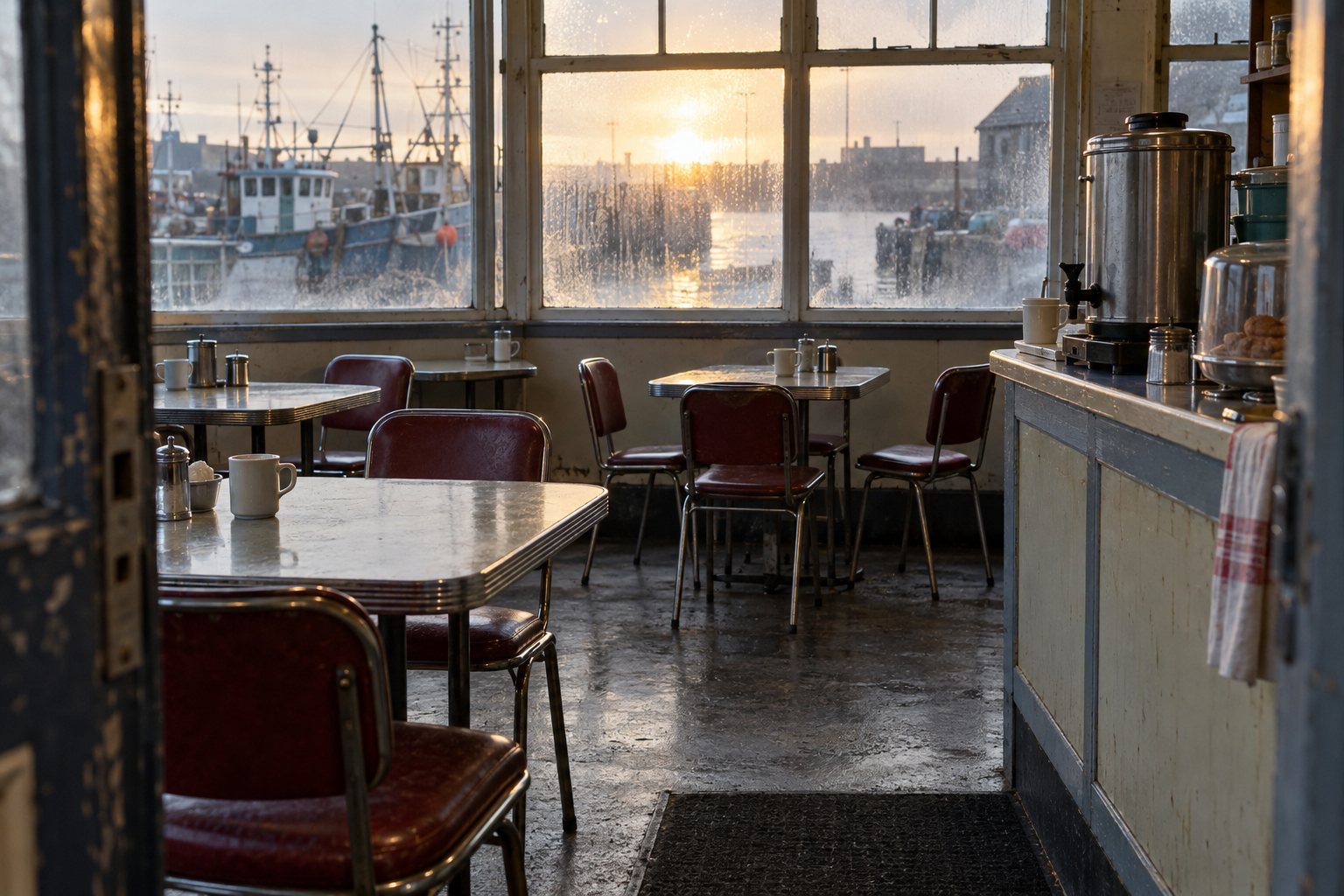
Continued on p. 7 →Penhaligon's on Harbour Street, before the boats come in. AI-generated
For forty-one years, if you were on Harbour Street before six in the morning, the only light on was at Penhaligon's. Ruth Penhaligon, who has died aged eighty-four, opened the café at half past four for the boats and closed it at two, when she said the tea went stale and so did the conversation. She was born in a house on Chapel Row, the daughter of a crab fisherman, and took over the café from an aunt in 1979 with, she said, "a tea urn, eleven tables and a debt". She paid off the debt in six years and never changed the tables. Fishermen ran up tabs that lasted whole seasons. She kept them in a school exercise book and never once, according to her son Mark, asked for the money. "She knew everybody would pay when the fish came in," he said. "And they did. Mostly." She knew everybody would pay when the fish came in. And they…